
Challenge of emissions transparency in global logistics
Despite the growing demand for accurate carbon data, the logistics sector faces significant barriers, including fragmented systems, data privacy concerns, high costs, and lack of standardization. Current emissions reporting processes are manual, inconsistent, and inaccessible for many, especially SMEs.
iLEAP bridges this gap by providing open technical specifications and a standardized protocol for automated, interoperable data exchange, enabling companies to access and share trusted emissions data efficiently. This initiative supports the transition to primary data-based reporting, simplifies emissions management, and accelerates decarbonization across the logistics value chain.

Our Vision
At iLEAP, we envision a future where the decarbonization and sustainability transition of global logistics is accelerated through a dynamic ecosystem of interoperable software solutions. This ecosystem empowers businesses to measure, verify, and continuously enhance the transparency on environmental impact of every shipment, paving the way to achieve a 1.5-degree (net-zero) future.
Our Mission
Our mission is to develop open technical specifications and robust digital infrastructure that enable global measurement, reporting, and reduction of logistics emissions. As an initial step, iLEAP facilitates access to and the exchange of trusted emissions data for all organizations within logistics value chains based on the GLEC Framework and ISO 14083 standards, fostering collective action for decarbonization in the logistics sector.
iLEAP Design Principles
The iLEAP Technical Specifications and its infrastructure are rooted in the following principles
What have we accomplished so far?
Real world implementation
Tech Specs v1.0.0 release
iLEAP Whitepaper v1.0 launch
Tech Specs (pre-release v1.1)
Unlock more use cases
B2G reporting, MBM, data quality, iLEAP approval….etc.
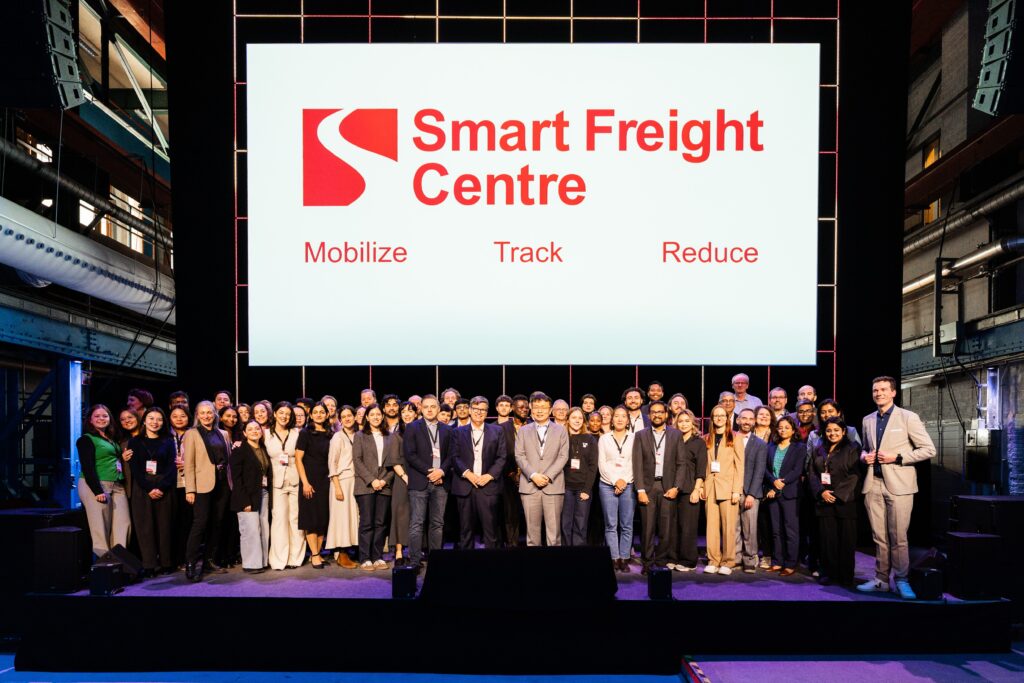
About Smart Freight Centre
The Smart Freight Centre (SFC) is a globally active non-profit organization working for over 10 years to decarbonize the logistics sector. Among other things, SFC published the GLEC Framework, the first and most globally recognized logistics emissions accounting standard, which was later standardized as ISO 14083. In addition, SFC operates various other decarbonization strategies for maritime, logistics fleet electrification, air freight, and much more. We accelerate the reduction of logistics emissions to achieve a zero-emission global logistics sector by 2050 or earlier, consistent with 1.5 pathways.
About SINE Foundation
SINE is a nonprofit organization working at the intersection of governance and digitization. Its mission is to develop the digital public goods necessary for inter-organizational collaboration, such as standards and open-source software, to establish a sustainable and cooperative global economy.
